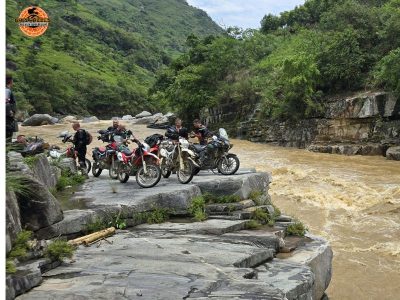
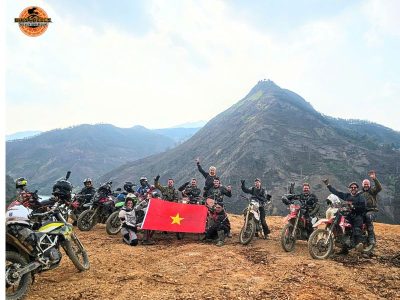
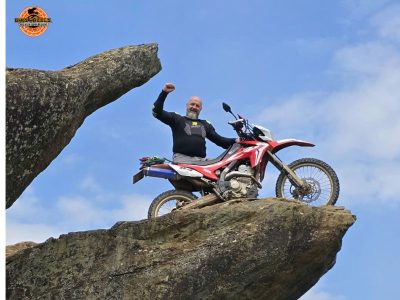
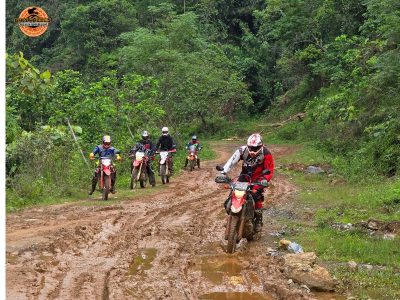
Are you planning to conquer the iconic Ma Pi Leng Pass but still unsure which time of year offers the most beautiful scenery and safest riding conditions? In this guide, “Best Time to Join Ma Pi Leng Pass Tours Revealed,” Chiwheels Motorcycle Tour will break it all down for you: which months offer clear skies, which seasons bring cloud-wrapped mountains and the jade-green Nho Que River, and when to avoid heavy rain, falling rocks, or slippery roads. With years of experience leading motorbike tours across Ha Giang, Chiwheels not only reveals the true “golden time” to visit but also shares practical tips for choosing the right itinerary perfect for both first-time travelers and adventure-seeking riders.
Ma Pi Leng Pass in Ha Giang
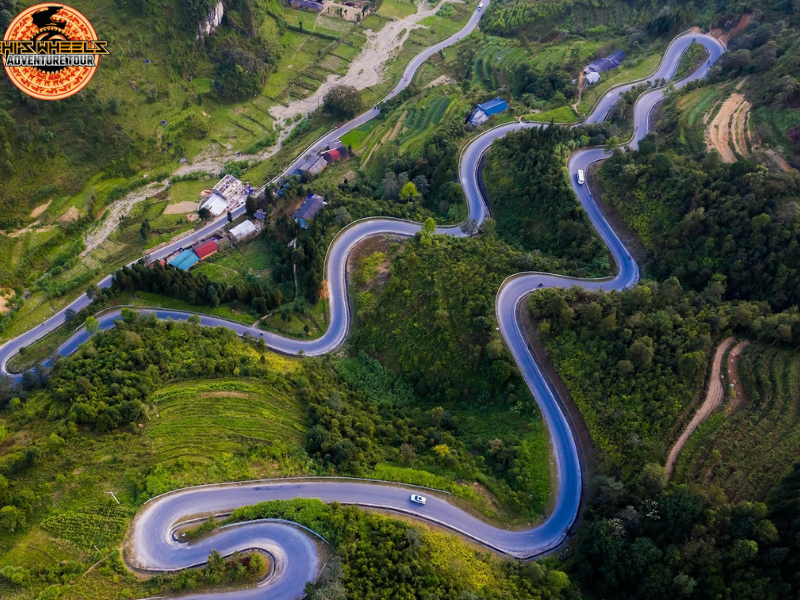
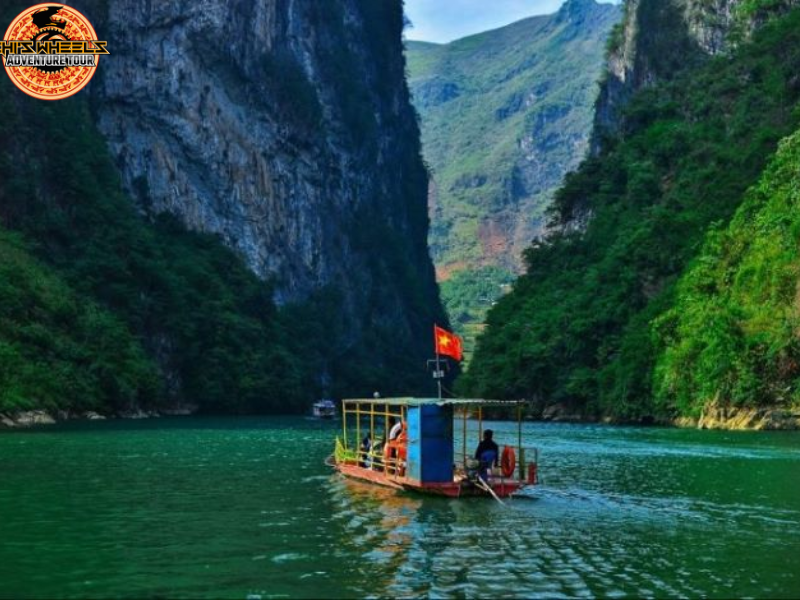
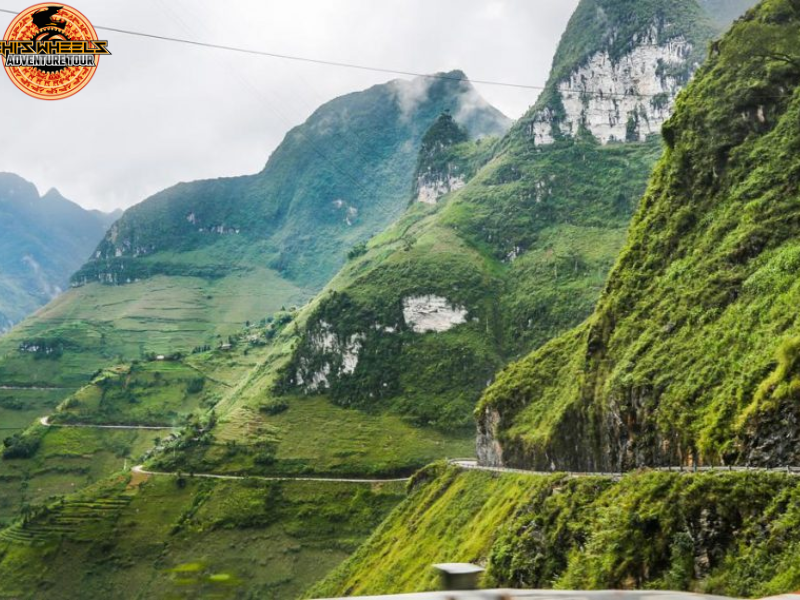
Ma Pi Leng Pass is one of the most famous mountain roads on National Highway 4C, connecting Dong Van Town and Meo Vac, located within the Dong Van Karst Plateau Global Geopark in Ha Giang Province. The pass stretches about 20 kilometers, winding along steep limestone cliffs and overlooking the deep, emerald-green Nho Que River far below. The name “Ma Pi Leng” originates from the H’Mong language. Many documents and local people explain that the name can be understood as “horse’s nose bridge” or “horse’s nose ridge,” evoking the image of a high, narrow, and steep mountain slope so challenging that even horses would struggle to cross it, breathing heavily and hesitating with each step.
What is the weather like at Ma Pi Leng Pass?
The weather in the Ma Pi Leng Pass area is influenced by the subtropical mountainous climate of northern Vietnam, with two fairly distinct main seasons:
- Rainy season: from around May to September, with frequent rain and sometimes heavy downpours and dense fog.
- Dry season: from October to April of the following year, when the weather is usually dry and clear, considered the best time for motorcycle tours to conquer Ma Pi Leng Pass.
Temperatures here fluctuate significantly by season and time of day:
- Winter (around December to February): temperatures can drop to nearly 4–6°C; nights are very cold with strong winds, and it feels much colder than the thermometer reading.
- Summer (around June to August): daytime temperatures can reach 30–33°C, but due to the high mountainous terrain, it is not as oppressive as in the lowlands.
Rainfall is heaviest in July and August, when:
- Pass roads become slippery and may have falling rocks or localized landslides.
- Visibility can be reduced by fog and rain, making motorbike travel more difficult, especially for beginners.
As a high-mountain area, the air on the pass is usually fresh and cool, ideal for outdoor activities such as motorbike riding, trekking to see Tu San Gorge, and boat trips on the Nho Que River. However, temperatures can differ noticeably between morning, noon, and night, so when joining tours, you should prepare a windbreaker or a light jacket even during the dry season or summer.
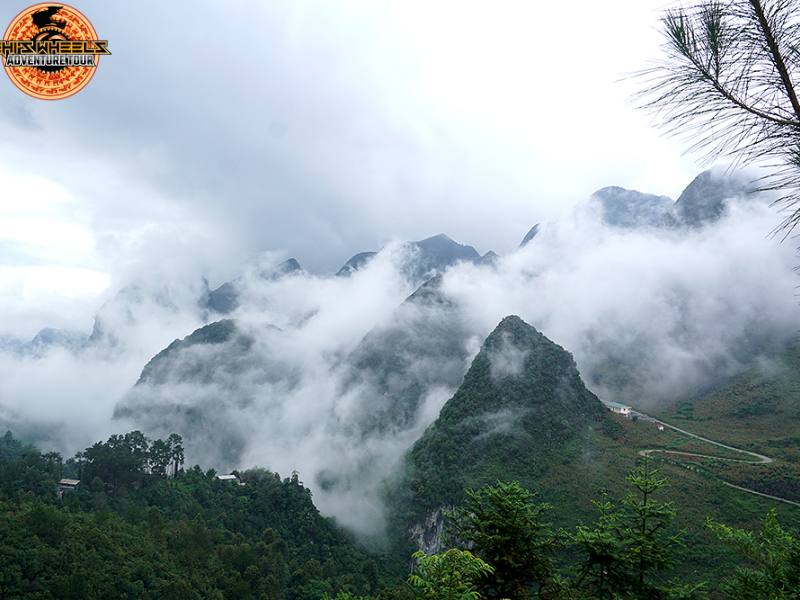
Ma Pi Leng Pass lies on National Highway 4C, connecting Dong Van and Meo Vac, running along sheer limestone mountainsides and close to the Tu San Gorge. Along the way up the pass, you can admire sweeping views of jagged karst mountains, deep abyss-like gorges, and the emerald-green Nho Que River winding far below. Along the road are H’Mong villages, terraced fields, cornfields, rustic rammed-earth houses, and occasional plants and flowers typical of the rocky plateau.
At the summit of Ma Pi Leng Pass, there is a stone stele recording the history of the “Happiness Road,” honoring the efforts of tens of thousands of youth volunteers who carved the road through the mountains. This area also has rest stops and scenic walking paths (skywalk/viewpoints) where you can enjoy panoramic views of Tu San Gorge and the Nho Que River.
When is the best time to join a motorbike tour of Ma Pi Leng Pass?
The ideal time to join a motorbike tour of Ma Pi Leng Pass is during the dry season (from October to April of the following year). During this time, the weather is cool, with little rain, dry roads, and clear visibility, making it very convenient to both ride and enjoy the scenery. The sky is usually clear with neat cloud formations, allowing you to capture iconic moments of the legendary hairpin bends clinging to cliff faces and the breathtaking views of the Tu San Gorge and the Nho Que River from above.
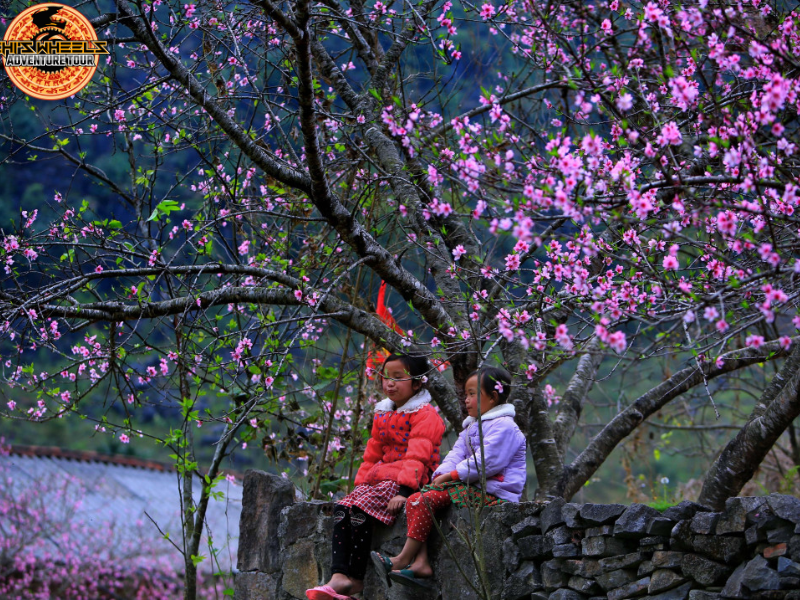
Spring (January – March)
This is the season of colors and festivals, perfect for those who enjoy lively atmospheres and exploring local culture:
- The weather is slightly chilly, with light morning mist and gentle sunshine at noon.
- The rocky plateau seems to wear a new coat as peach, plum, pear, and kapok flowers bloom in white, pink, and red across the villages.
- You can combine your trip with visits to Lung Cu, Lung Xa, Ma Le, and H’Mong – Tay – Nung villages, where the scenery is both majestic and very down-to-earth.
Some typical festivals include:
- Long Tong Festival of the Tay people: both a ceremony to pray for good harvests and a chance for villagers to gather, sing Then and Coi folk songs, and play traditional games such as tug of war, stick pushing, and con (cloth-ball) throwing. The atmosphere is very warm and not “staged” for tourists, so if you come at the right time, you can experience a very authentic Ha Giang.
- Khau Vai Love Market (27th day of the 3rd lunar month): a place where unfinished love stories reunite once a year. For visitors, it’s a chance to hear beautiful yet sad love stories, taste local dishes, and admire the colorful traditional costumes of ethnic minorities.
Summer (April – June)
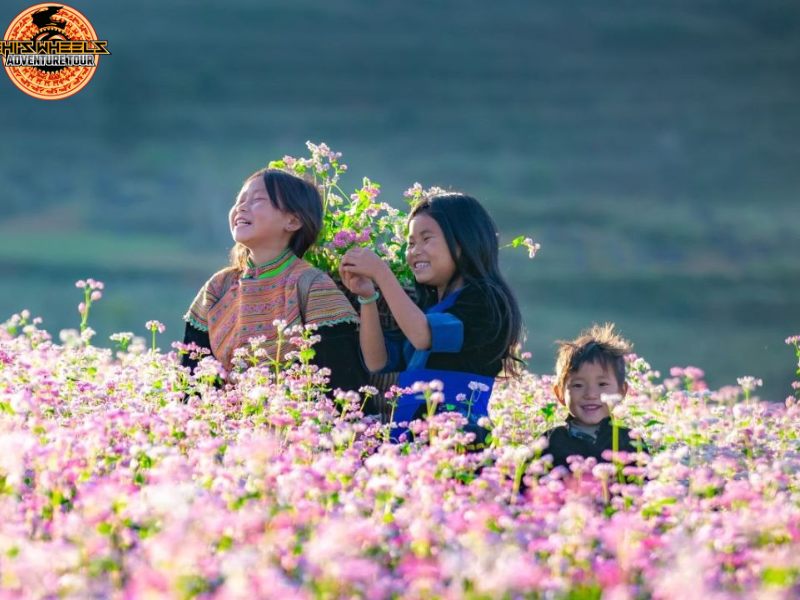
Summer in Ha Giang is not as stifling as in the cities, so taking a motorbike tour at this time is very enjoyable:
- The sky is usually blue, visibility is long, and clouds drift lazily over the mountain peaks, making the scenery look amazing on camera.
- You may spot off-season buckwheat flowers blooming sparsely along the roadside, mixed with terraced fields — not as spectacular as peak season, but enough to create a lovely highlight.
- In some areas of the rocky plateau, white tung flowers bloom, creating a scene that is both wild and poetic.
This is also a “paradise” for those who love riding:
- Steep passes, sharp curves, and roads hugging the mountains, with cliffs on one side and rocks on the other — very thrilling for confident riders.
- Riding in the late afternoon, when the sunlight slants across the slopes and mountain shadows stretch down toward the Nho Que River, is extremely impressive.
Autumn (July – September)
Many backpackers and photographers consider autumn the most beautiful time to travel Ma Pi Leng Pass:
- The Nho Que River turns emerald green and becomes clearer, making it ideal for boat rides, kayaking, and taking photos in the Tu San Gorge with towering cliffs on both sides.
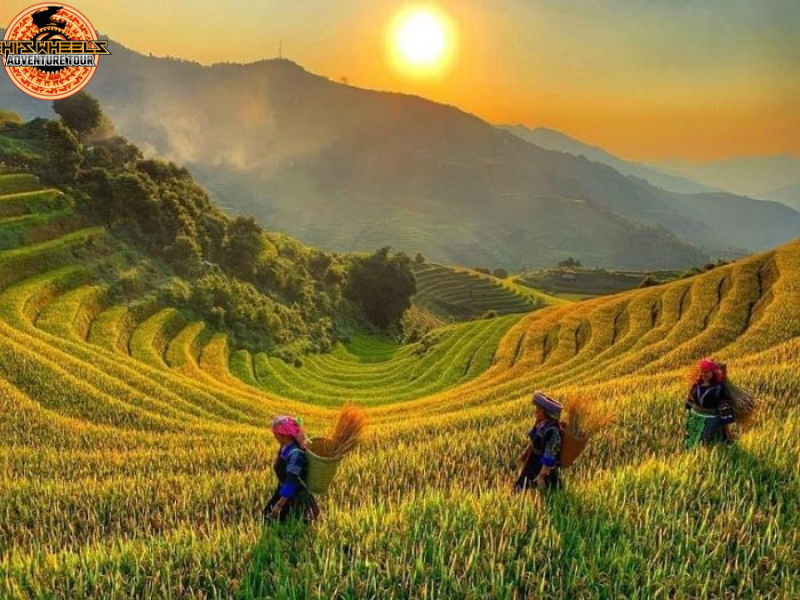
- Hoang Su Phi enters the rice harvest season, with terraced fields glowing golden, layer upon layer like waves. This is when “once-in-a-lifetime” photos are easiest to capture.
- The weather is drier, with less rain than peak summer, visibility is usually good, and the mountain scenery seen from the pass looks sharp and full of depth.
If you want a trip that combines mountain pass views, beautiful photos, and visits to many famous spots in Ha Giang, a Ma Pi Leng motorbike tour in autumn is almost a “safe and hard-to-go-wrong” choice.
Winter (October – December)
Winter is a season that fewer people choose, but it is well worth trying if you like cold weather and misty scenery:
- Early in the morning, clouds and fog fill the valleys, and on some days, looking down at the Nho Que River feels like gazing into a sea of clouds.
- Cloud-hunting spots such as Tay Con Linh and Chieu Lau Thi can be combined into multi-day itineraries.
This is also the season of mint honey:
- Along National Highway 4C, you will see many beekeeping huts and locals spinning honey.
- Mint honey has a light fragrance, a delicate sweetness, and a smooth, creamy aftertaste, making it a local specialty to buy as a gift.
Can you join a Ma Pi Leng Pass tour during the rainy season?
You can still join a motorbike tour of Ma Pi Leng Pass during the rainy season, but it is not the most optimal choice, especially for first-time visitors to Ha Giang or those with limited riding experience. The rainy season in Ha Giang usually falls from June to August, when sudden heavy rains, thick fog, and occasional risks of landslides or falling rocks can occur in some sections of the pass. Therefore, the most ideal and safest time for a Ma Pi Leng motorbike tour is still the dry season, when the weather is more stable, the roads are dry, and visibility is clearer.
In addition to the weather, road conditions during the rainy season can also cause many difficulties. Steep sections, damaged road surfaces, or construction areas can become muddy, slippery, and covered with puddles and mud, making it harder to control the bike. Rain and fog also reduce visibility, which is especially dangerous at sharp hairpin bends or cliff-hugging sections with deep ravines on one side.
Activities when joining a Ma Pi Leng Pass tour
Joining a Ma Pi Leng Pass motorbike tour is not just about riding through a beautiful mountain pass, but also a journey to experience nature and highland culture if you take the time to stop, explore, and interact with local people.
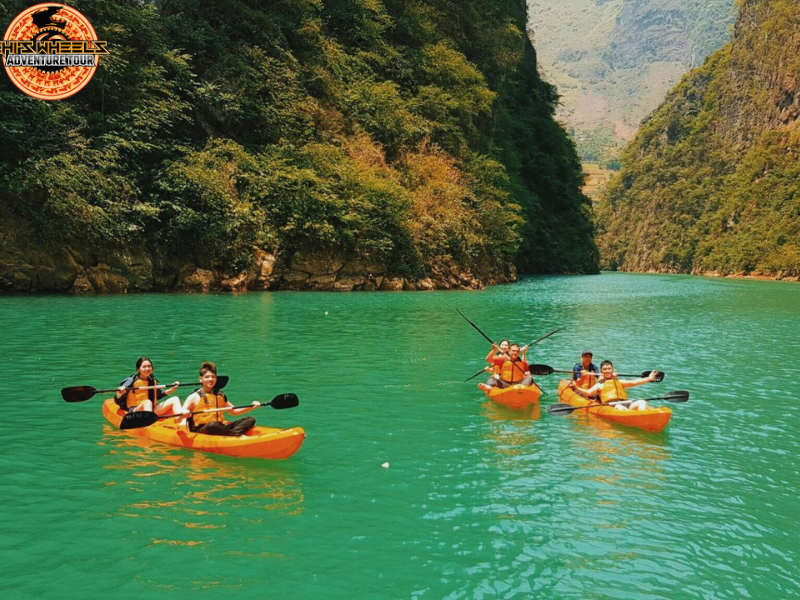
Kayaking on the Nho Que River
Kayaking on the Nho Que River allows you to see Ma Pi Leng from a completely different perspective: towering vertical cliffs of the Tu San Gorge above and the peaceful emerald-green water below. As you paddle while looking up at the mountains and clouds, you will truly feel how small you are in front of the majestic nature. In season, buckwheat flowers and rice fields on the mountain slopes make the scenery even more impressive.
Trekking (hiking)
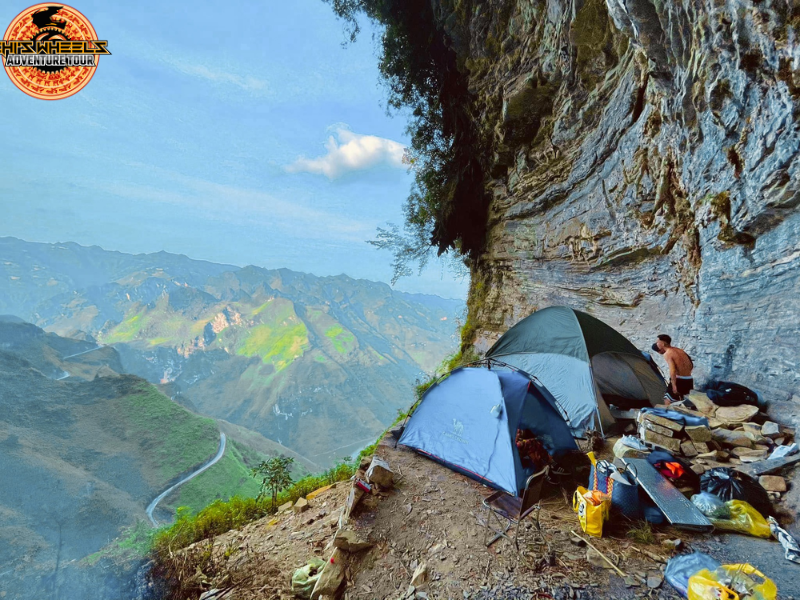
Trekking around the Ma Pi Leng area is a highly worthwhile experience if you like to slow down and feel nature more deeply. Trails winding along mountain slopes, long uphill paths, towering rock formations, and deep valleys below create a sense of both challenge and visual satisfaction. The best time to combine trekking with a motorbike tour is around September to October, when the rice fields turn golden and the weather is cool and dry.
Visit the Dong Van Karst Plateau
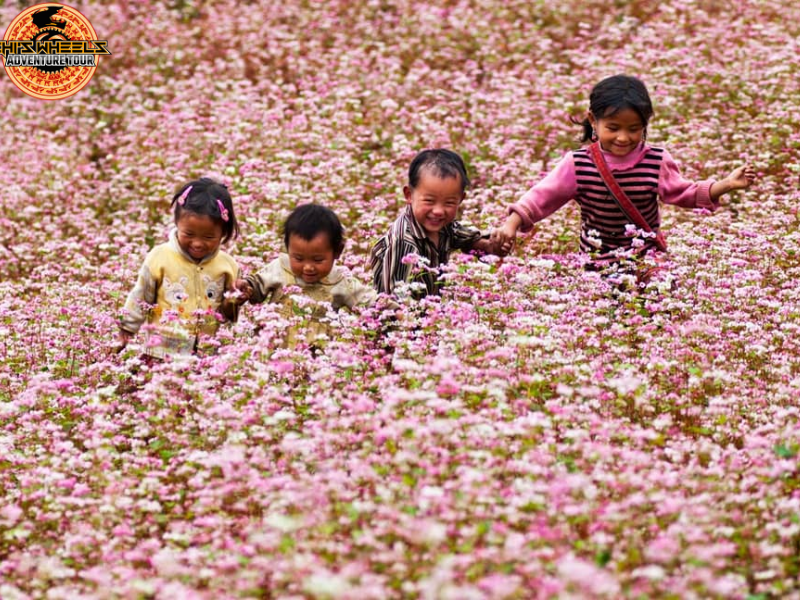
From Ma Pi Leng Pass, you can continue to the Dong Van Karst Plateau to witness the full grandeur of limestone mountains, winding roads, and small villages tucked along the mountainsides. Depending on the season, you may encounter peach blossoms, plum blossoms, buckwheat flowers, or golden rice fields, with each time of year offering a different landscape.
Must-try dishes when joining a Ma Pi Leng Pass tour
Not only does a Ma Pi Leng Pass motorbike tour bring the thrill of conquering one of Vietnam’s most beautiful and challenging roads, it also offers the chance to enjoy Ha Giang’s distinctive local cuisine. In the cool mountain air, sitting in a small roadside eatery, savoring hot, steaming dishes while watching clouds drift over the rocky peaks is an experience every backpacker should try at least once.
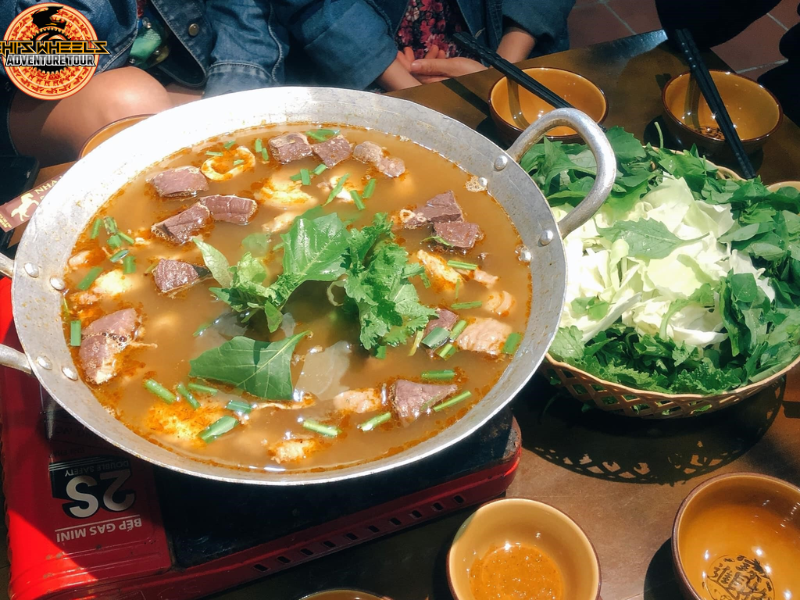
Thang Co (traditional horse meat stew)
Thang Co is a traditional dish closely associated with the life of the Hmong people and is commonly found at highland markets. It is usually cooked from horse meat, bones, and offal (most commonly), and sometimes beef, pork, or buffalo, combined with spices such as lemongrass, ginger, kaffir lime leaves, and chili, along with vegetables like cabbage. A steaming pot of Thang Co in the middle of the market, with its distinctive aroma spreading through the air, is where many backpackers stop to enjoy a hot bowl along with a cup of corn wine, fully experiencing the atmosphere of the highlands.
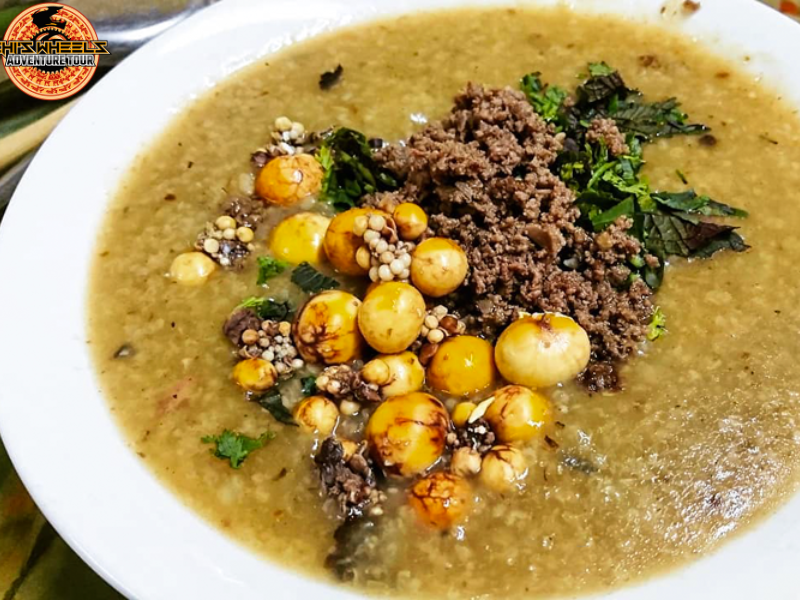
Au Tau porridge
Au Tau porridge is one of Ha Giang’s famous “cold-weather specialties.” It is cooked from mountain sticky rice, pork trotters, and au tau root — a type of tuber that is highly poisonous if not processed properly, but becomes a valuable medicinal ingredient when soaked and simmered correctly. The au tau root is cleaned, soaked overnight in rice-washing water, then slowly simmered until soft before being cooked together with the rice and pork-bone broth. A hot bowl of au tau porridge is fragrant with sticky rice, lightly fatty from the pork, and has a slightly bitter yet nutty taste. Locals believe it helps keep the body warm and reduce fatigue after long journeys.
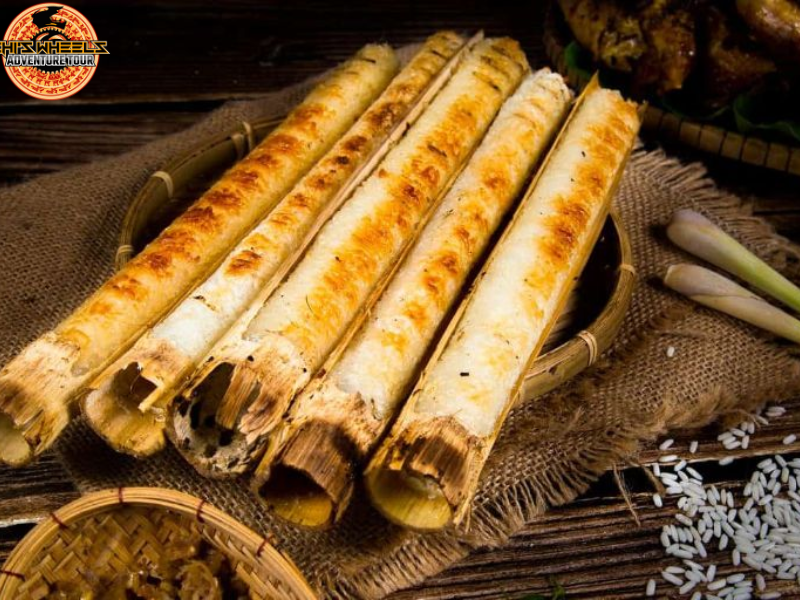
Bac Me bamboo rice
Bac Me bamboo rice is a rustic yet refined dish closely tied to the life of the Tay people in Ha Giang. Sticky rice is washed, soaked, then placed into young bamboo tubes, sealed with banana leaves, and grilled over hot coals until fragrant. When the outer bamboo is peeled away, the rice appears soft, white, and sticky, carrying the aroma of rice blended with the scent of bamboo and banana leaves. It is best enjoyed with sesame salt or grilled stream fish. For many backpackers, sitting by the roadside or at a small market corner, breaking off a warm piece of bamboo rice in the cool weather on the way to Ma Pi Leng is an unforgettable experience.
No matter which season you visit Ma Pi Leng, the journey will be full of emotions, with heart-stopping mountain passes, the emerald-green Nho Que River, and Ha Giang’s rich local cuisine. If you want a trip that is both safe and fully immersive without worrying too much about the itinerary, vehicles, or road conditions, you can join the Chiwheels Motorcycle Tour.